
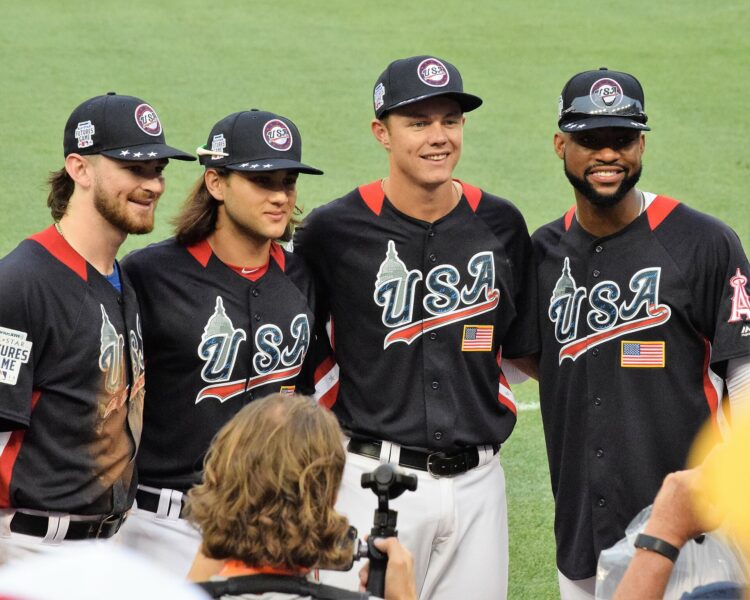
The New York Mets moved quickly to address their roster needs after missing out on Kyle Tucker, securing two-time All-Star infielder Bo Bichette on a three-year, $126 million contract. The deal carries a straight average annual value of $42 million with no deferred money and includes player opt-out clauses after both the first and second seasons, giving Bichette maximum flexibility in his career trajectory. The signing came just hours after Tucker chose the Dodgers, representing a significant pivot for the Mets as they look to rebuild their lineup.
This contract reshapes the landscape for both the Mets and Blue Jays organizations while setting Bichette up for potentially lucrative future opportunities. The deal pushes the Mets’ payroll to $345.7 million, well above the top competitive balance tax threshold, and positions the 28-year-old to slot in at third base despite never playing the position professionally. For Toronto, losing their longtime shortstop means receiving draft compensation but also saying goodbye to a franchise cornerstone.
Here you’ll find a complete breakdown of the contract’s financial structure, the strategic implications for all parties involved, and what this signing means for the Mets’ roster construction as they attempt to compete in a challenging National League East division.
Bo Bichette’s Contract Details and Structure
Bo Bichette signed a three-year, $126 million contract with the New York Mets that includes opt-out clauses after both the first and second seasons along with a full no-trade clause. The deal positions him as one of baseball’s highest-paid players by average annual value while giving him significant flexibility to return to free agency.
Overview of the Mets Agreement
The New York Mets secured Bo Bichette on a three-year deal worth $126 million after missing out on Kyle Tucker, who chose the Los Angeles Dodgers. Steve Cohen’s organization moved quickly to land the former Blue Jays shortstop, who will transition to third base in Queens.
The contract contains no deferrals, meaning Bichette receives the full $126 million over the three-year term without any money pushed into future years. This structure differs from some recent mega-deals that have included significant deferred payments.
Jon Heyman and The Athletic’s Will Sammon first reported the agreement. The deal became official on a Friday in January 2026, giving the Mets a proven contact hitter to bolster their lineup.
Salary Breakdown and Average Annual Value
Bichette’s contract carries an average annual value of $42 million per season. This AAV ranks fourth among all players in baseball, trailing only Shohei Ohtani, Juan Soto, and Kyle Tucker while tying with Zack Wheeler.
The $42 million annual figure significantly impacts the Mets’ competitive balance tax calculations. Your team’s luxury tax payroll increases substantially with this addition, though the short-term nature of the deal provides some future flexibility.
Bichette will earn more in his first year with the Mets ($42 million) than he accumulated over his entire seven-year tenure with Toronto ($37.1 million in career earnings). The dramatic pay increase reflects his emergence as one of baseball’s premier contact hitters.
Opt-Out Clauses and No-Trade Clause
The contract includes opt-out provisions after both the 2026 and 2027 seasons. Bichette can exercise either option to return to free agency, similar to recent deals signed by Alex Bregman and Cody Bellinger.
These opt-outs give Bichette leverage to seek a longer-term contract if he performs well. At 28 years old when the deal begins, he could potentially land an eight or nine-year extension after just one season if his production matches his track record.
The full no-trade clause prevents the Mets from moving Bichette without his explicit consent. This protection remains in effect for the entire contract term, regardless of whether he exercises an opt-out.
Key Contract Features:
- Full no-trade clause for entire term
- Opt-out available after Year 1 (2026)
- Opt-out available after Year 2 (2027)
- No movement restrictions on player
Draft Compensation and Qualifying Offer Impact
Bichette rejected a qualifying offer from Toronto before entering free agency. This decision means the Mets forfeit their second-highest draft pick in the 2026 draft and $500,000 from their international bonus pool.
The Blue Jays receive a compensatory draft pick after the first round as a result of losing Bichette as a qualifying offer free agent. Your acquisition cost extends beyond the $126 million commitment to include these draft and international signing penalties.
Teams that exceed the competitive balance tax threshold face enhanced penalties for signing qualifying offer free agents. The Mets’ draft pick forfeiture and international pool reduction reflect these stricter consequences for high-spending organizations.
Contract Implications for Bo Bichette, Mets, and Blue Jays
Bichette’s $126 million deal with the Mets includes opt-out clauses after both the first and second seasons, allowing him flexibility while the team secures an All-Star infielder. The contract requires a position change to accommodate Francisco Lindor and creates ripple effects for both organizations’ roster construction.
Bo Bichette’s Role and Position Change
You’ll see Bichette transition to third base with the Mets, moving away from his longtime shortstop position to accommodate Francisco Lindor. During the World Series, Bichette already demonstrated positional flexibility by playing second base while recovering from injury. This versatility made him an attractive fit for a Mets infield that needed help at the hot corner after Brett Baty and Mark Vientos failed to claim the starting role.
The opt-out clauses after years one and two give Bichette significant leverage. He receives $47 million for one year if he opts out immediately, or $89 million for two years. His $42 million average annual value ties for the sixth-highest in baseball history, reflecting his value despite the position switch.
At 27 years old, Bichette brings a proven track record after hitting .311/.357/.483 with 18 home runs and 94 RBIs in 2025. He finished second in the American League batting race and demonstrated clutch performance during Toronto’s World Series run.
Impact on Mets Roster and Lineup
Your Mets lineup gains a two-time All-Star who posted 181 hits in 2025, second in the American League. The addition comes after losing the Kyle Tucker sweepstakes to the Los Angeles Dodgers, who signed him to a four-year, $240 million deal. Bichette slots into a lineup featuring Juan Soto and Pete Alonso, giving the Mets three proven offensive threats.
The position change to third base solidifies the left side of the infield with Lindor at shortstop. This configuration addresses the team’s biggest weakness without disrupting their All-Star shortstop. The full no-trade clause included in Bichette’s deal indicates the Mets view him as a cornerstone piece rather than a stopgap solution.
Bichette’s playoff performance adds postseason credibility. He hit .348 with one home run and six RBIs over seven playoff games, including a crucial three-run homer in Game 7 of the World Series.
Blue Jays’ Compensation and Roster Adjustments
You should know the Blue Jays receive an extra draft pick after the fourth round because Bichette rejected their $22 million qualifying offer in November. This compensation provides minimal consolation for losing a homegrown talent selected in the second round of the 2016 draft.
Toronto now faces questions at both middle infield positions. With Bichette gone and second baseman Andres Gimenez taking over shortstop duties during the playoffs, the Blue Jays need to rebuild their infield. The team reportedly pursued both Bichette and Kyle Tucker but lost both players to division rivals.
The departure leaves Vladimir Guerrero Jr. as the franchise’s primary star after he signed a 14-year extension. Bichette and Guerrero developed together through the minor leagues, and their partnership defined the Blue Jays’ identity for six seasons. Toronto’s failure to retain Bichette while competing against the Phillies and Mets highlights the challenges small-market teams face in free agency.
